Humpback whales are beautiful and majestic marine creatures that are incredible to observe in person. If you’re planning a whale-watching experience, there are certain behaviors that you can expect to witness. People have hypothesized that such behaviors are forms of hunting techniques, communication methods, mating rituals, or mechanisms of defense. While the reason behind many of these behaviors remains a mystery, there is no denying that witnessing them is a truly unique and miraculous experience. From breaching to tail slapping, this guide to humpback whale behavior will cover some of the most common humpback whale habits and prepare you for what to expect during your whale-watching experience.
Breaching
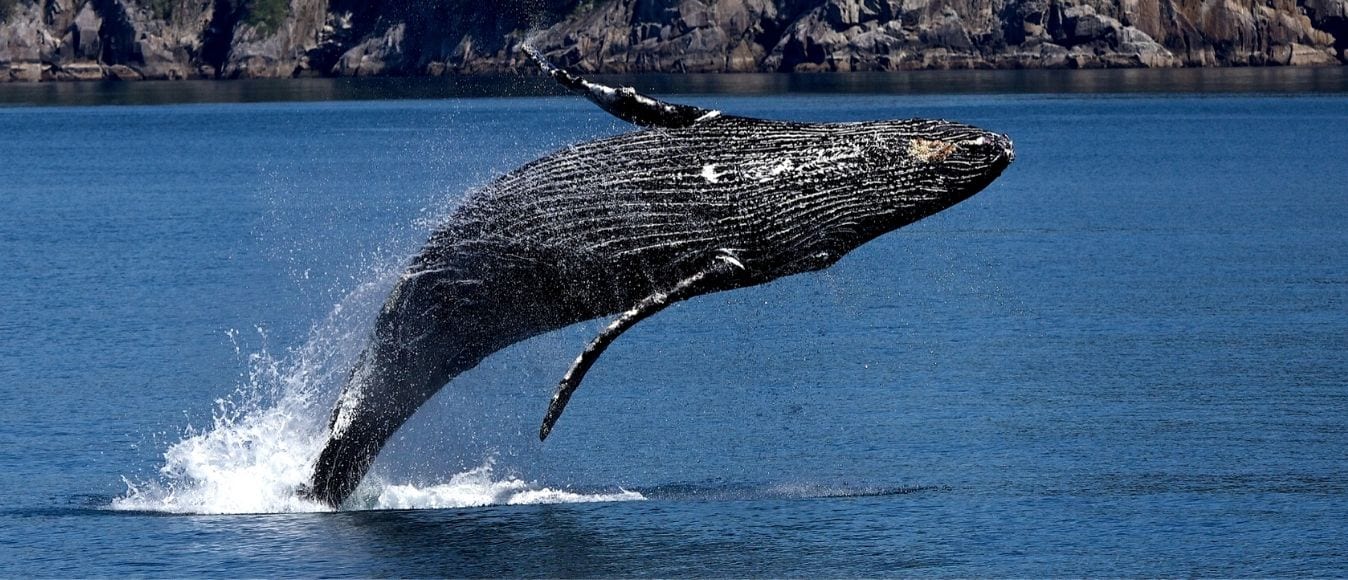
One of the most majestic and impressive humpback whale behaviors is the breach. This behavior involves the whale hurling itself partially or fully out of the water and then landing with a huge splash. If you’re lucky, you may get to witness a breach that also involves a midair twirl—a particularly impressive maneuver.
Tail slapping
Another humpback whale behavior that is remarkable to witness is the tail slap. The tail slap is exactly what its name describes: the humpback whale will lift its tail out of the water and forcefully slap it back down against the surface. This behavior creates an immense splash and noise.
Blow
A blow closely resembles the appearance of a water fountain. This behavior occurs when the whale needs to exhale the breath it has been holding before taking in another at the surface. The rapid expulsion of the breath results in a misty spray that can be seen shooting above the surface of the water.
Spy-hopping
Spy-hopping refers to a behavior in which the humpback whale pokes its head up over the surface of the water. The whale will rise vertically enough so that its eyes are above the surface of the water. It will then spin so that it can get a good look at its surroundings before descending back into the sea.
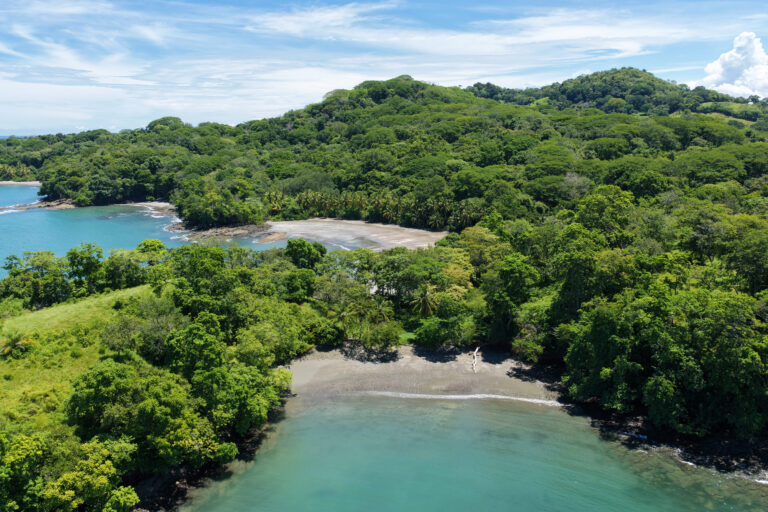
One of the best places to go humpback whale-watching is the Gulf of Chiriquí in Panama. Between July and October, thousands of humpback whales complete one of the largest migrations in the world and travel all the way from Antarctica to the warm waters of Panama to give birth. During this time, viewers have a 95 percent success rate of seeing a whale. Because the Gulf of Chiriquí is a marine-protected area, the whales view the area as a safe place and are less afraid to approach boats. As such, you can often see the whales from an up-close view, rather than from a great distance. To have the whale-watching experience of a lifetime, plan your excursion through Selva Terra Island Resort.